A Dining Dive Into the Spruce Point Inn Archives
Throughout the ages, dining at Spruce Point Inn has maintained a familiar hospitable grace. Season after season, across two centuries, the rustic epicureanism of this peninsula has proven an enduring part of the draw for generations of Spruce Pointers. Join us as we spin back the dial and take a look at how our legacy of gathering, dining, and imbibing has changed—and remained the same—through the chapters of the Inn’s history.
The Sporting Years
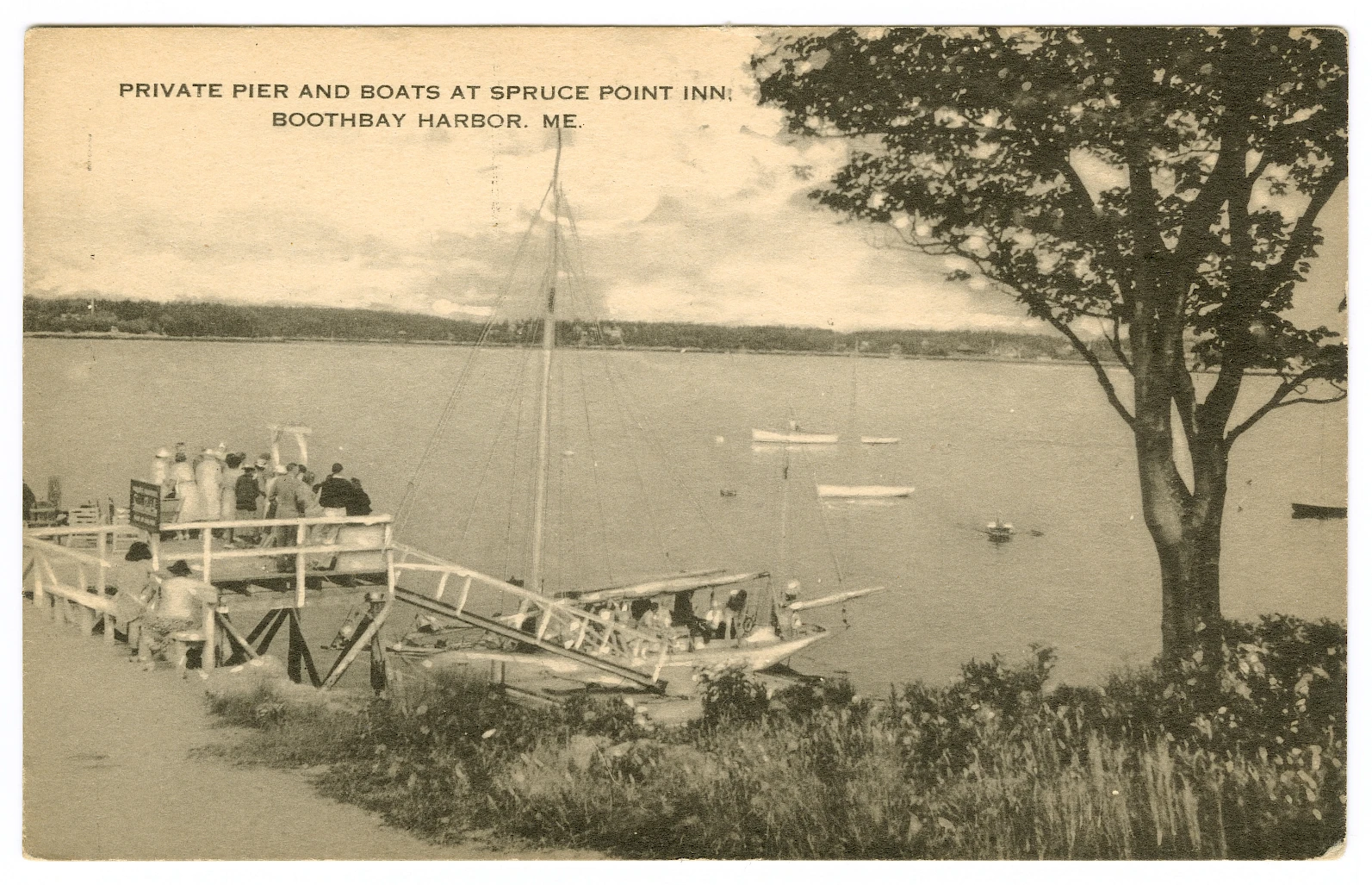
In the late 19th century, the sporting life is what attracted visitors first to the peninsula. Beginning its existence as an invite-only clubhouse, Spruce Point Inn hosted hunting and fishing outings throughout the summer season for individuals interested in purchasing home lots on the peninsula, or the socially connected few who earned an invitation to experience travel to the Maine coast to enjoy a period of hunting, fishing, and rustic relaxation.
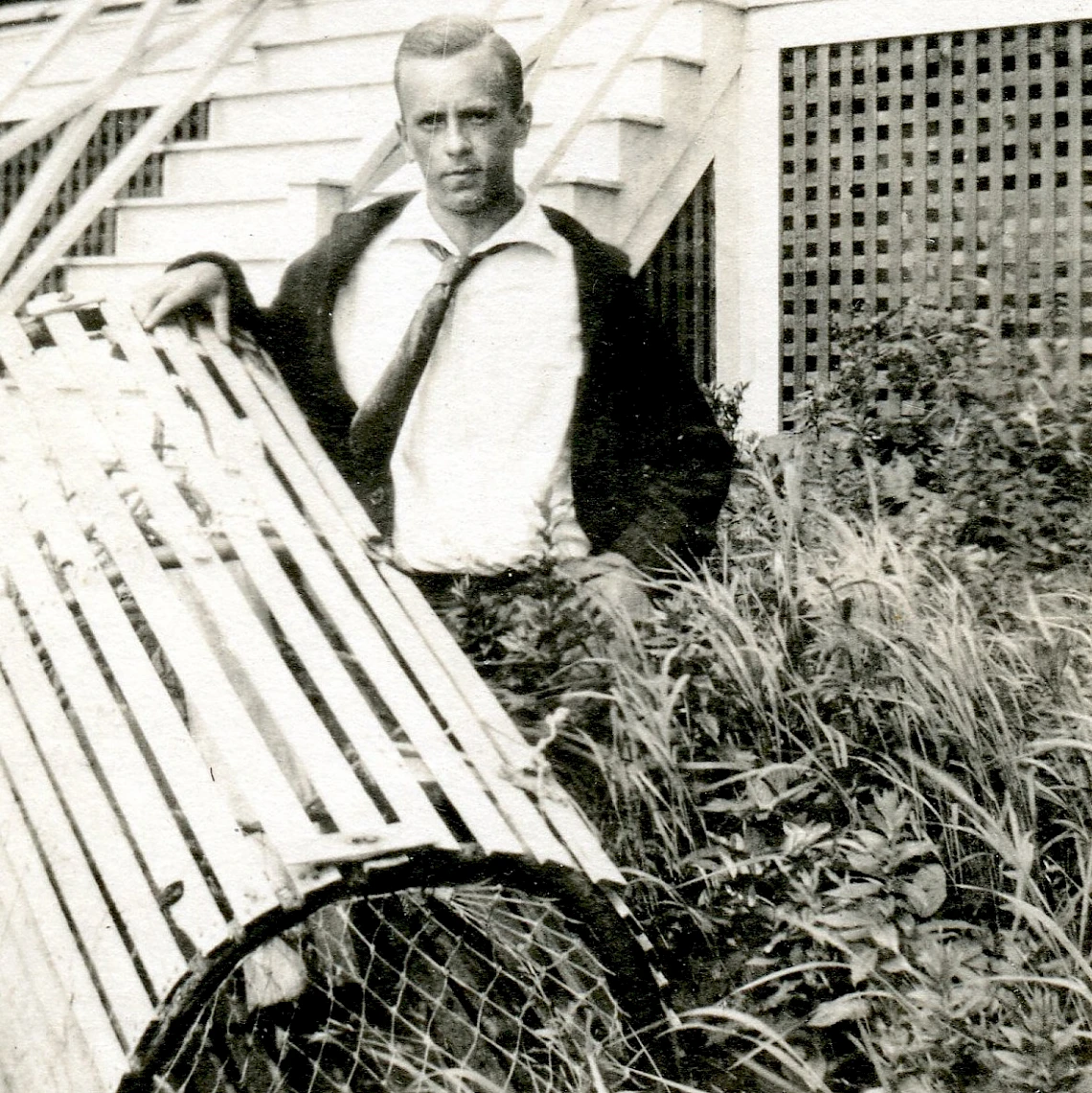
These guests awoke early for fishing excursions on the harbor or hunting outings in the islands in the outer harbor. Breakfast was brief and practical—hot coffee and chowder taken early, before the day’s pursuits began. Lunch was dictated by the day’s game action and prepared by guides provided by the Inn: a picnic featuring the result of the morning's endeavor.
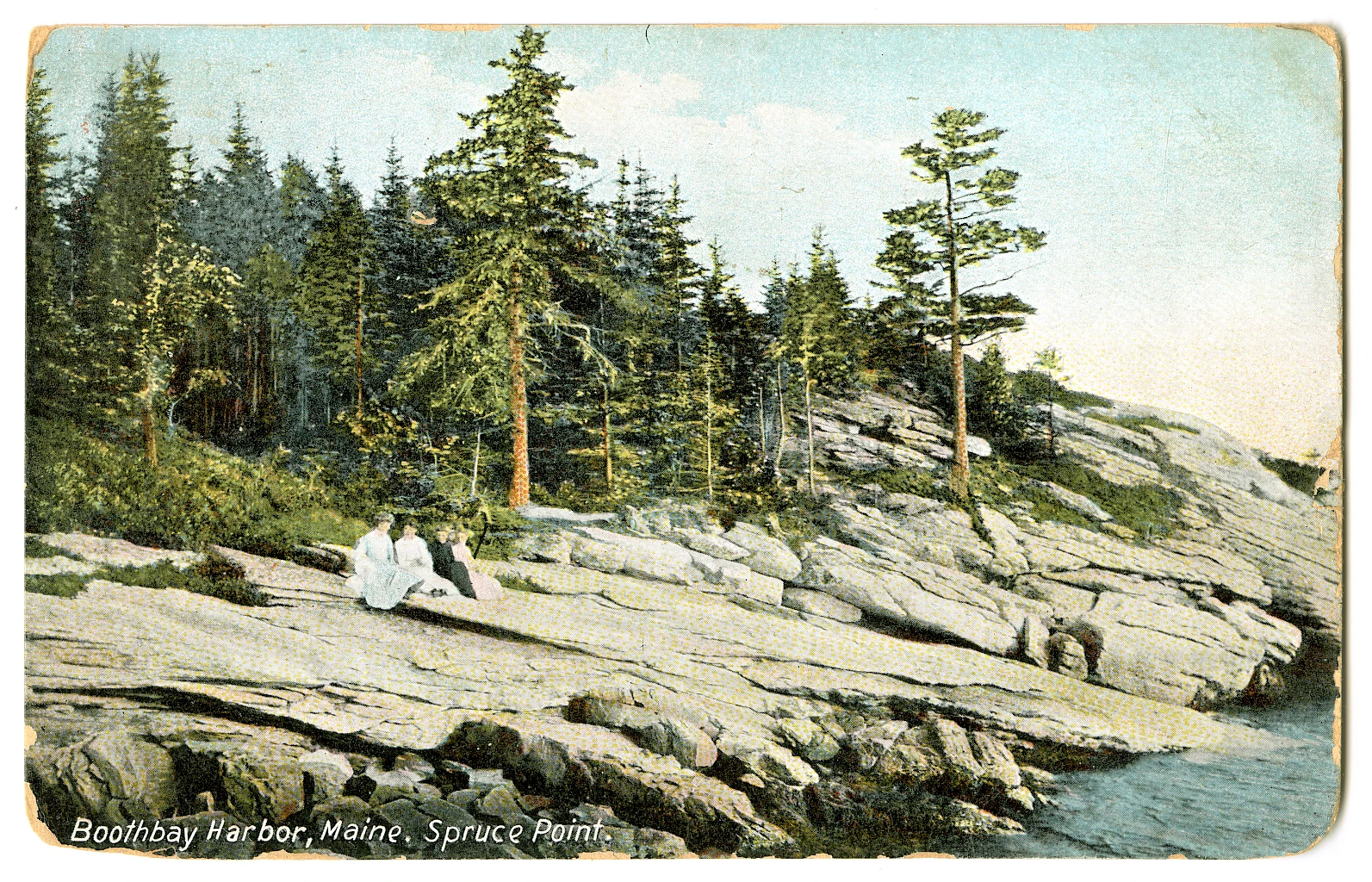
While the men were off on their hunting excursions, Spruce Point’s female guests often enjoyed picnics of their own along the rocky coast. It wasn’t uncommon for their lunches to be punctuated by occasional visits from members of the Commonwealth Art Colony, who walked from the village in search of new views to paint from the peninsula.
In the evening, supper was prepared in the Inn’s kitchen and served in its first dining room, with similar views that we enjoy today from Whiteclover. Meals were generous and rustically appointed, featuring the day’s catch or kill, cooked to one’s taste. Cocktails and drinks were served before dinner as the sun set over Boothbay Harbor, establishing an evening ritual that remains familiar to guests today.
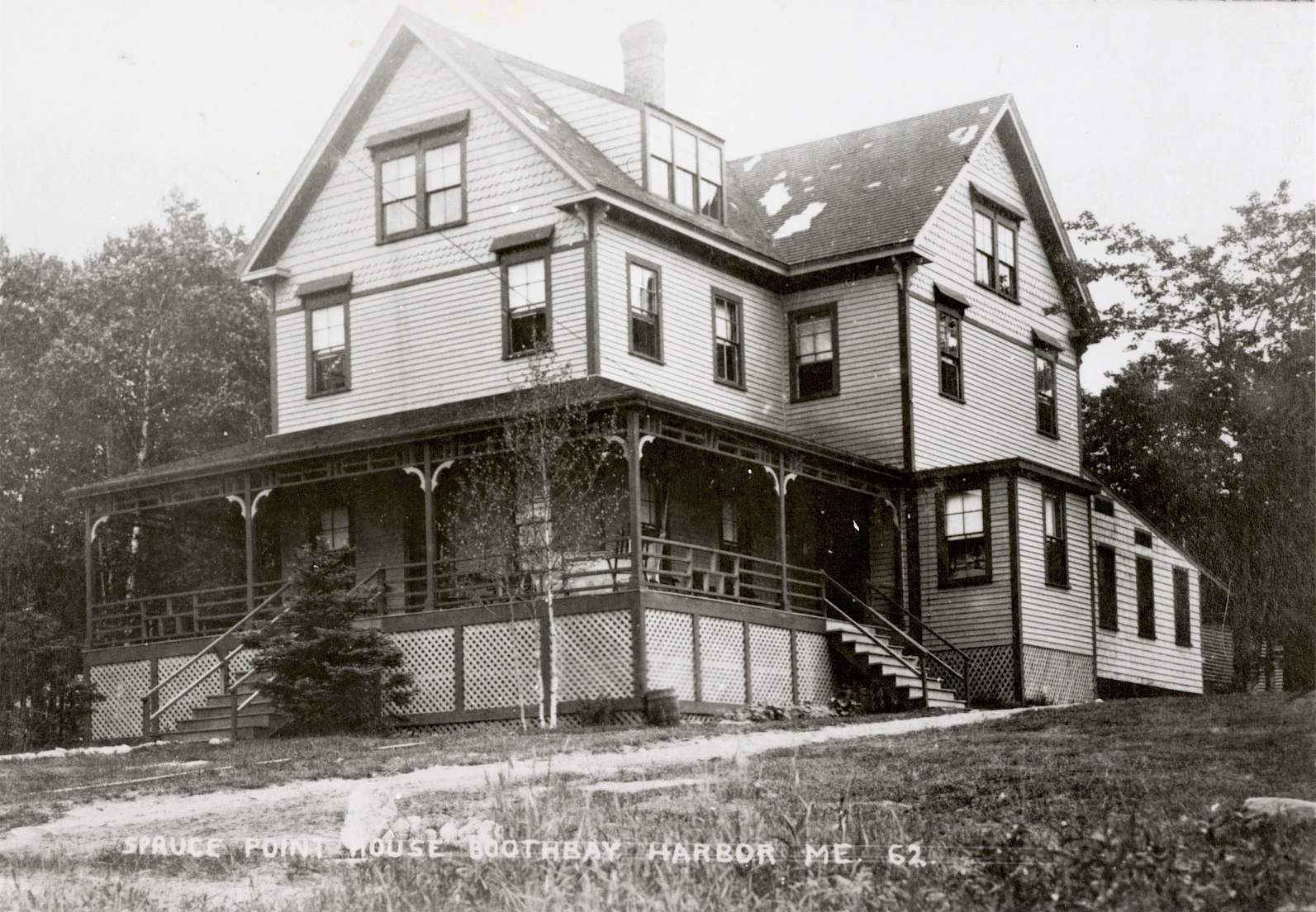
As interest in coastal leisure grew, the clubhouse gradually opened its doors beyond its original circle. By the dawn of the 20th century, it had reconstituted itself as the Spruce Point House, welcoming a growing number of Maine visitors and marking a new chapter in the peninsula’s hospitality story.
Prohibition and the Quiet Years
During Prohibition, Spruce Point entered a quieter, more discreet era—one shared by many coastal properties across Maine. Though alcohol was officially outlawed, hospitality endured. Like many in the region, the proprietors of Spruce Point produced their own gin, distilled from juniper berries foraged from the surrounding landscape. Gin and tonics became the favored drink of the time, enjoyed quietly and without ceremony.
During this era, the hotel was a prominent hub of social activity—just insulated enough on the peninsula from town to keep its own company. Legend has it that the hotel’s General Manager kept one of Burnt Island Lighthouse’s assistant lightkeepers quietly on the payroll. Should unfamiliar headlights appear on Grandview Avenue after dark, a discreet lantern signal from island to shore would alert the bartender, allowing time for adequate preparation for the unexpected visitor.
The American Plan Years
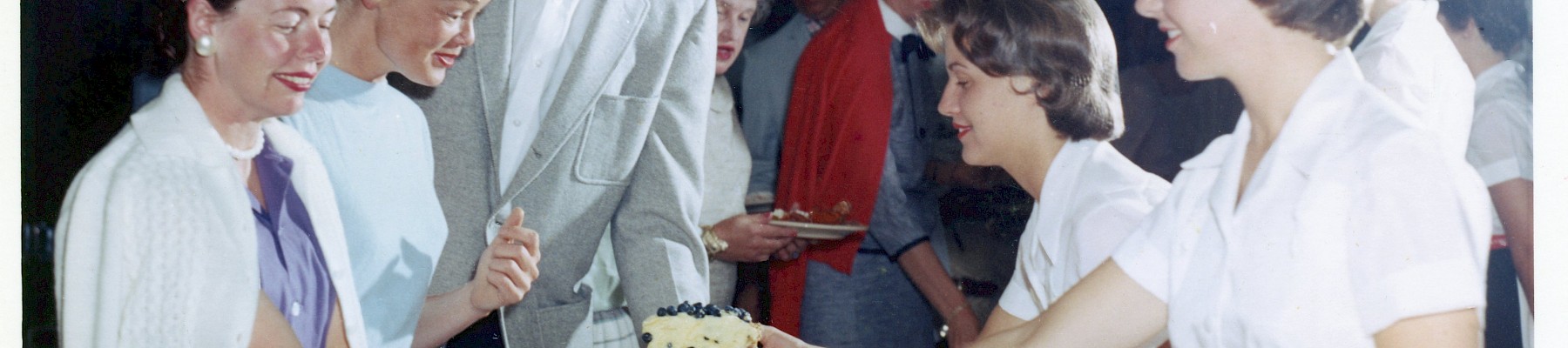
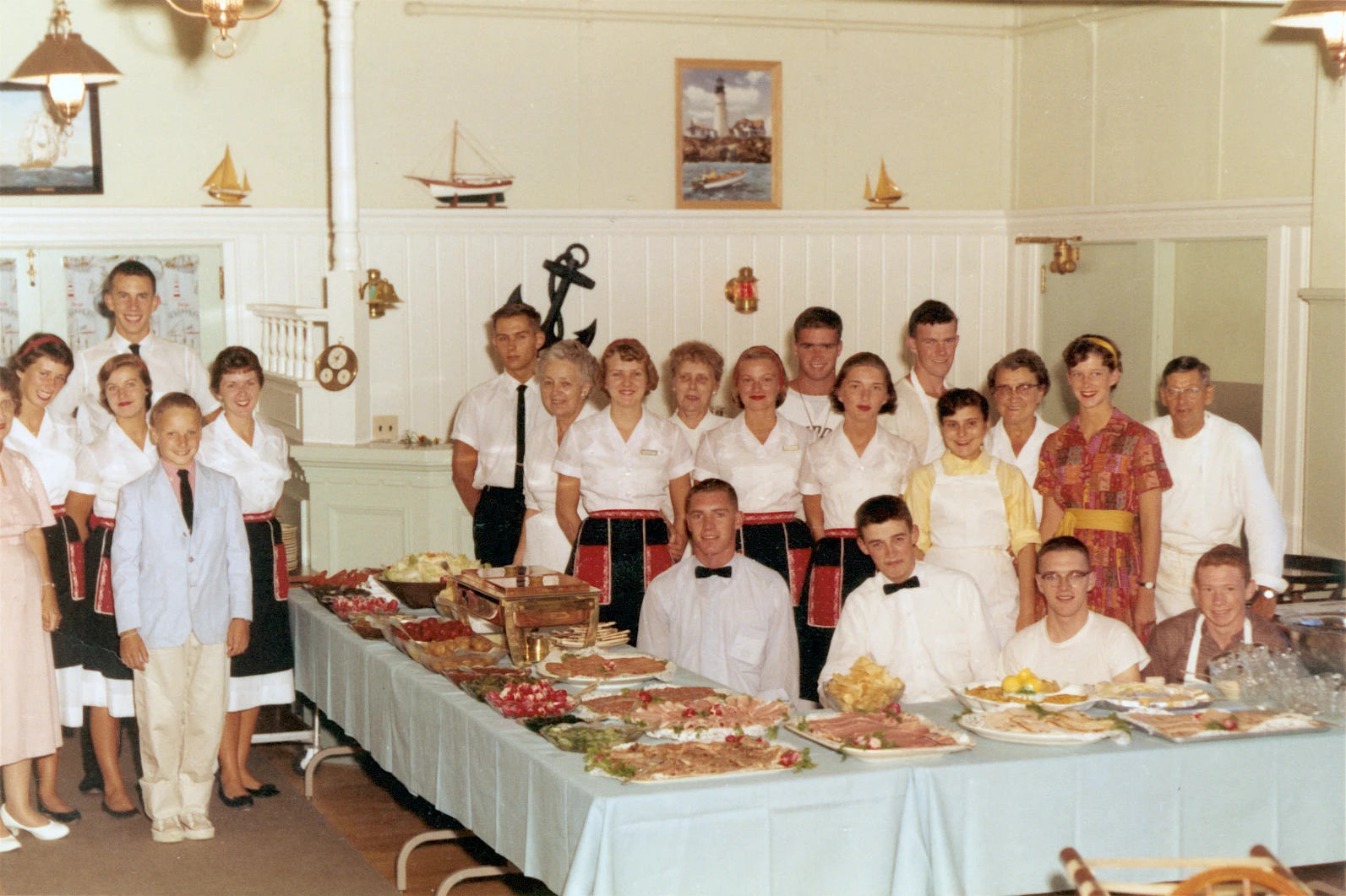
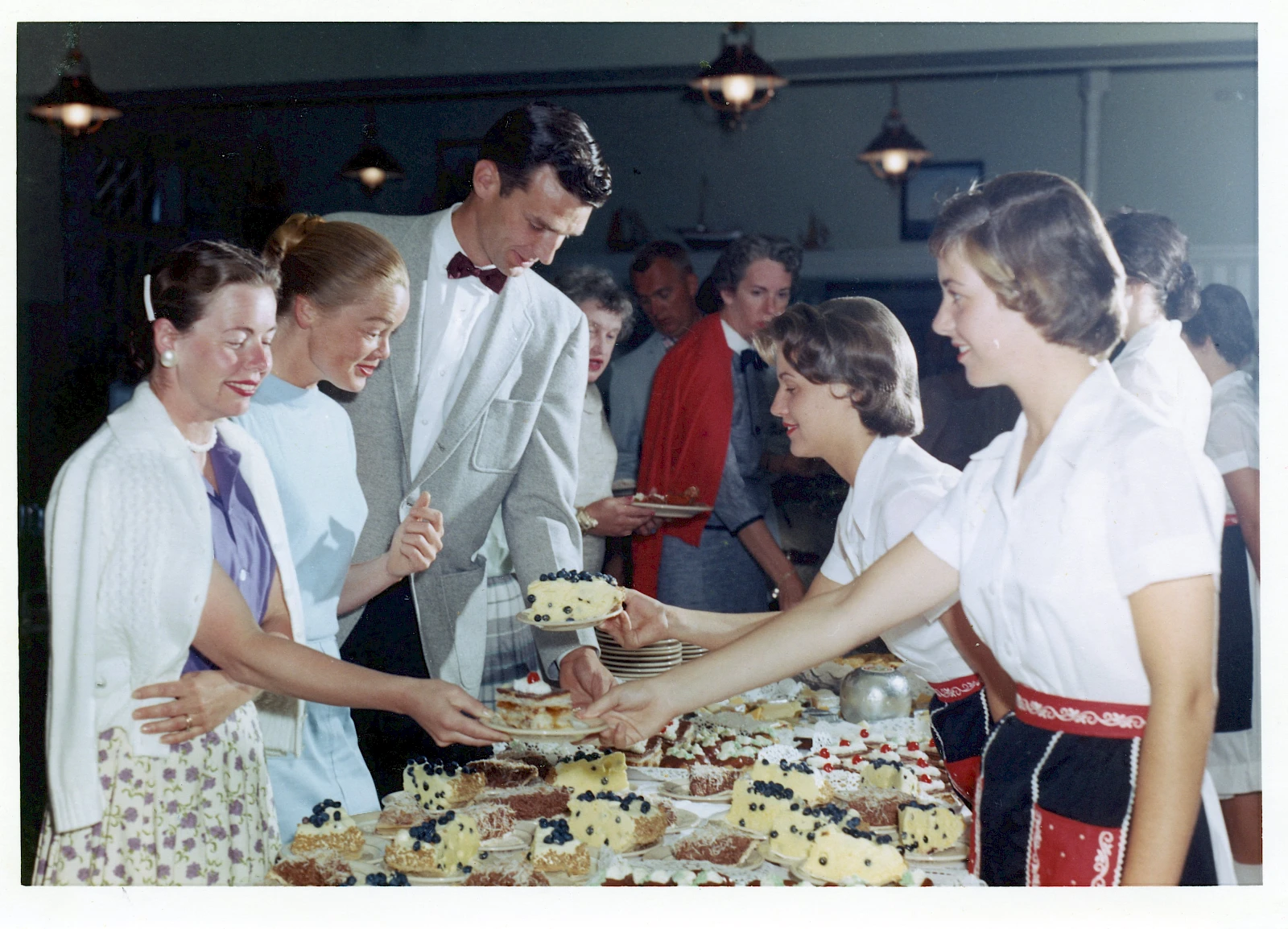
As summer tourism resumed after World War II, Spruce Point Inn evolved from an exclusive Maine sporting retreat into a classic seaside resort welcoming a broader generation of vacationers. Dining once again became the anchor of daily life through the “American Plan,” which included breakfast, lunch, and dinner with a guest’s room rate.
During this period, breakfast was a prelude to tennis matches on the Inn’s clay courts and sailing races departing from the resort dock. Lunches were lively and highly social affairs, often stretching long into the afternoon. Dinners were the central ritual of each evening, with coat and tie required for entry into the resort’s dining room and a compulsory dance to follow in the ballroom—today’s Lighthouse Hall—where music and social life extended well beyond the table.
Clambakes on the Point
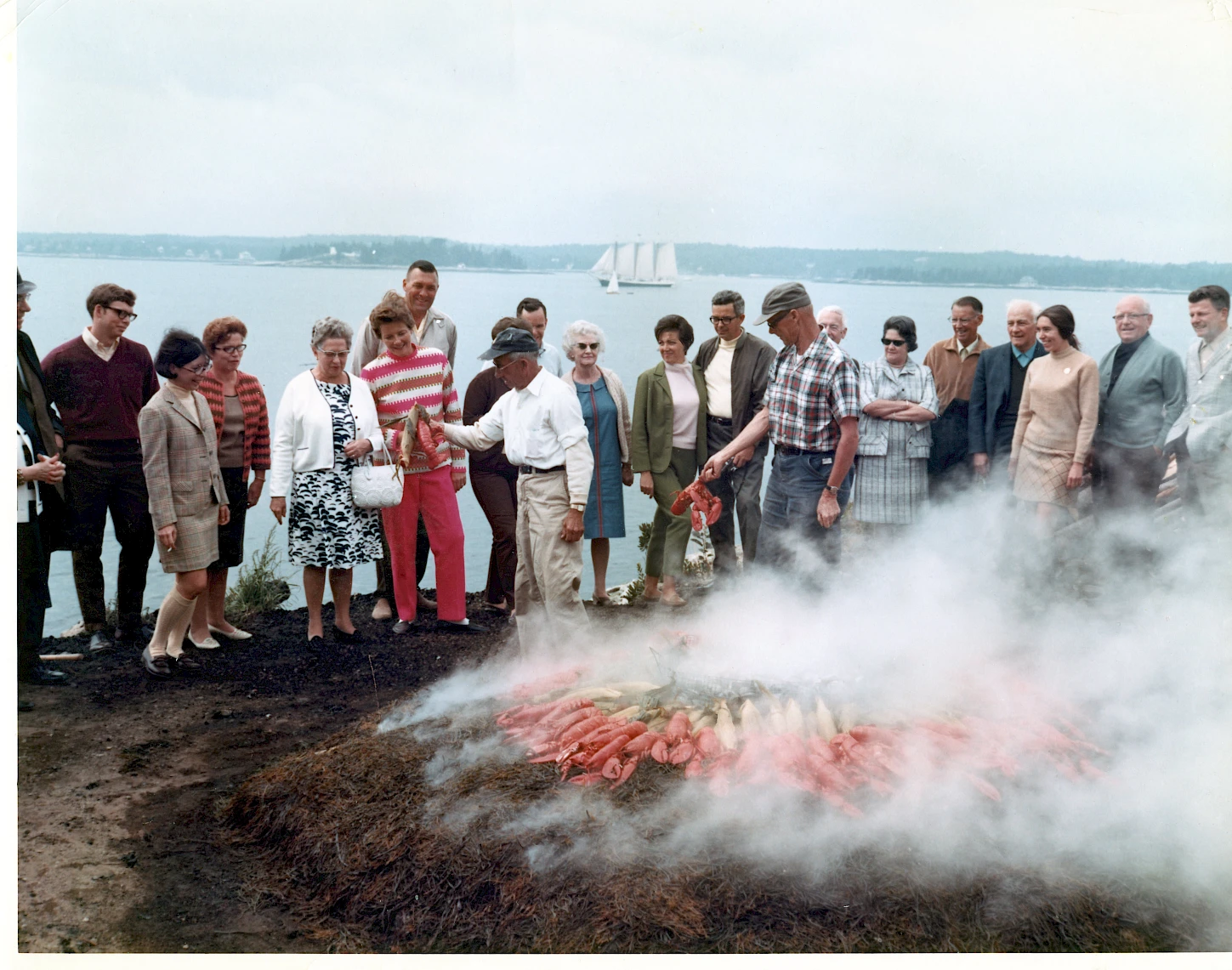
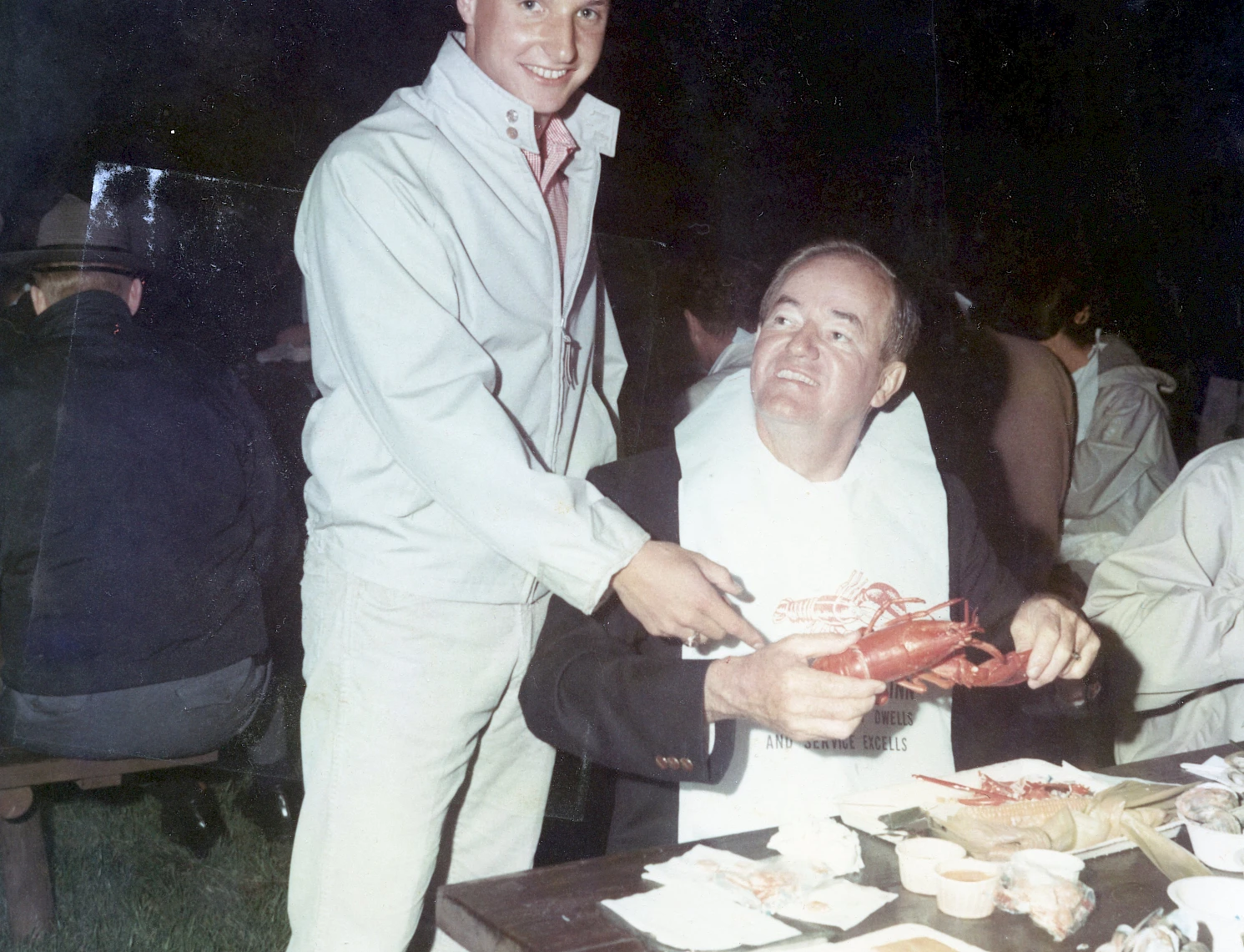
Alongside the formality of the dining room, one of Spruce Point’s most enduring food traditions unfolded outdoors. For decades, guests gathered on the old picnic grounds at the head of the Spruce Point peninsula—land now occupied by private homes—for traditional Maine clambakes. These were true shore-side affairs: lobsters steamed over hot stones, layered with seaweed, and served communally in the open air.
Clambakes remained a fixture of summer life at the Inn well into the mid-20th century. As the property evolved, the tradition continued in another form, with guests enjoying clambakes via the iconic Cabbage Island Clambakes. Arriving by boat and gathering at long communal tables, the experience remains beloved and largely unchanged today.
Dining Today at Spruce Point Inn
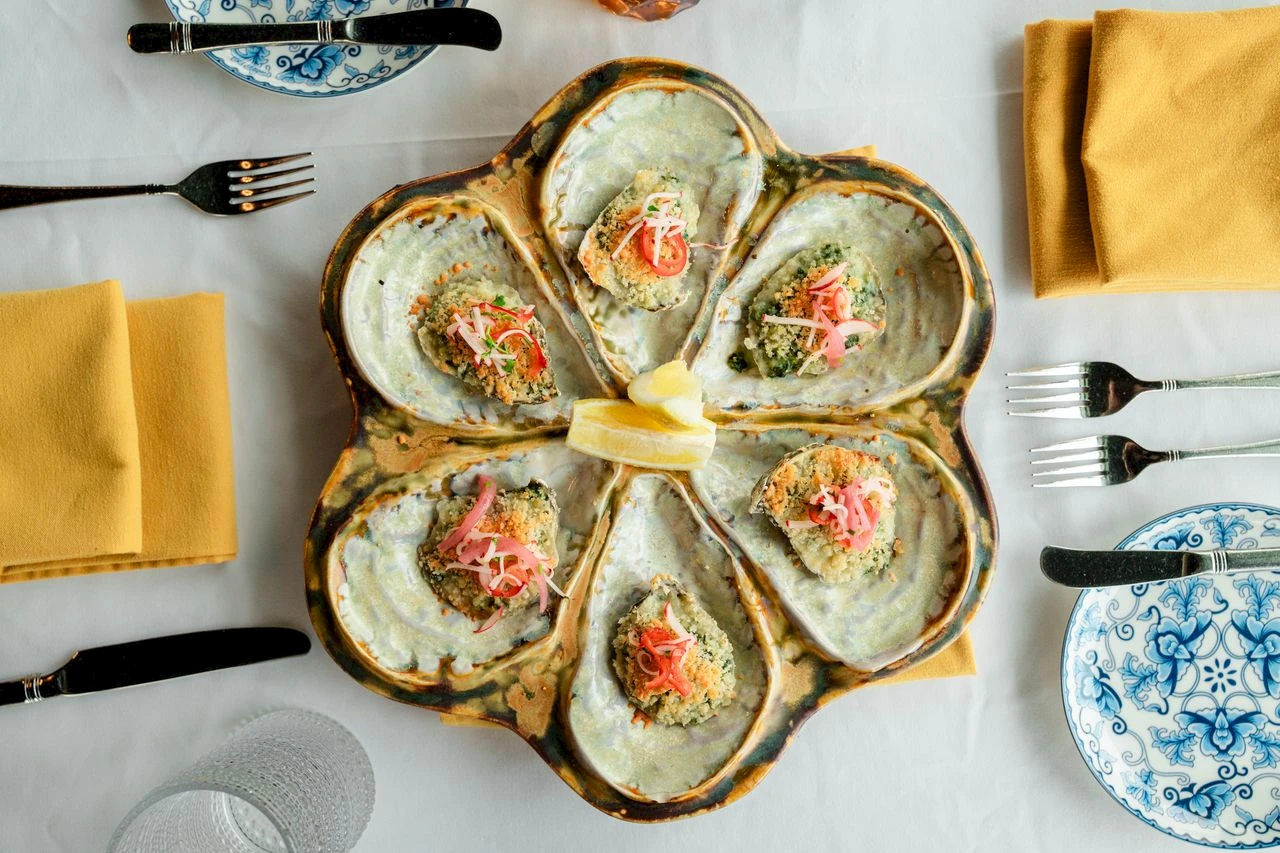
While the rituals of dining at Spruce Point Inn have evolved, their spirit remains intact. The Inn’s historic fine dining room—once jacket-required and formal in tone—has given way to Whiteclover, where contemporary coastal cuisine is served in a setting that honors the same sweeping harbor views guests have enjoyed for generations.
The bar has followed a similar arc, which evolved from its speakeasy to Bogies, a local favorite for many years, to today's esteemed The Salty Stag, now entering its sixth season as the Inn’s convivial hub for cocktails, shared plates, and sunset conversations.
From sporting picnics and shoreline clambakes to candlelit dinners and sunset cocktails, dining at Spruce Point Inn has always been about more than what’s on the table. Across generations, food and drink has served as a way to gather, to mark the passage of the day, and to share in the rhythms and pleasures of the Maine coast along the outer reaches of Boothbay Harbor.